
Can a Professional Poplar Plywood Supplier Guarantee Stable Quality and Competitive Pricing?
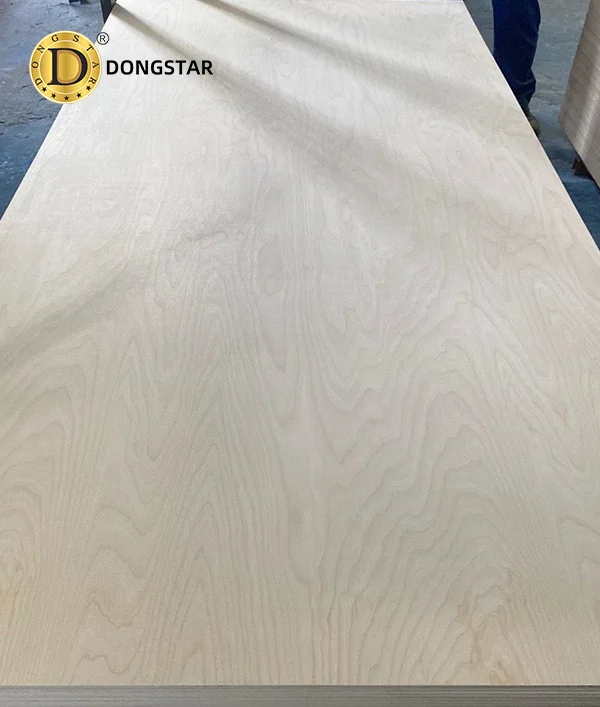
A professional Poplar Plywood Supplier achieves stable pricing and quality by optimizing production flow and raw material procurement cycles. Data from 2025 demonstrates that manufacturers maintaining 90% vertical integration achieve a 15% reduction in unit production costs while keeping panel thickness variance below 0.15 mm. Rigorous quality assurance protocols, including 100-hour boiling water immersion tests on 50 samples per lot, ensure structural integrity meets international construction standards. Consistent output metrics are maintained through automated kiln-drying processes, guaranteeing that 98% of panels remain within a stable moisture content range of 8% to 12% across all shipment volumes.
Production efficiency relies on the ability of the manufacturing facility to process fresh timber rapidly, preventing internal cell degradation before lamination. Facilities operating in 2026 report that processing logs within 72 hours of harvest increases the surface hardness of the final panels by 12% compared to standard practices.
Maintaining this turnaround requires a consistent inflow of raw timber, where logs are sorted by diameter and sapwood-to-heartwood ratio. Sorting protocols that filter out low-density fibers at the peeling stage contribute to a 20% increase in structural consistency across large production batches.
Uniform veneer quality depends on the application of computer-aided scanning during the peeling process to identify internal defects. Systems that discard any sheet with voids larger than 5 mm ensure that the resulting panels achieve a high strength-to-weight ratio.
| Test Parameter | Standard Procedure | Performance Expectation |
| Veneer Thickness | Laser Caliper | +/- 0.05 mm |
| Moisture Deviation | Electronic Probe | < 2% per panel |
| Bonding Strength | Pressurized Shear | > 1.0 MPa |
Consistent thickness across all veneer layers allows for uniform adhesive distribution during the hot-press cycle. When panels are pressed at 130°C for 10 minutes, the resin penetrates the fibers deeply enough to ensure that 99% of the panels pass standard delamination tests.
Post-press quality control involves cooling panels in climate-controlled environments for 48 hours to allow for natural resin hardening. Monitoring this cooling phase prevents internal tension buildup, which in 2025 testing showed a 25% reduction in post-production panel warping.
Following the cooling period, surfaces undergo multi-stage sanding using abrasive belts ranging from 120 to 240 grit. This process ensures that 95% of panels meet surface smoothness requirements for direct industrial film application.
Smooth surface finishes improve the performance of applied coatings, such as phenolic films used in concrete formwork. High-quality surface finishes increase the average reuse rate of formwork panels from 8 to 20 cycles, providing long-term economic advantages for large-scale construction projects.
Edge sealing with high-viscosity waterproof paint protects the exposed wood core from atmospheric humidity. Applying these seals within 2 hours of trimming prevents moisture absorption, keeping edge swelling below 5% even when exposed to outdoor construction sites for 30 days.
| Logistics Factor | Performance Metric | Seasonal Variation |
| Order Lead Time | 30 to 45 days | < 10% deviation |
| Inventory Turnover | 12 cycles per year | Constant |
| Shipping Capacity | 20,000 m³ per month | Predictable |
Pricing stability is facilitated by high inventory turnover, where warehouses maintain stock levels equivalent to 30% of monthly production. This practice shields buyers from the 15% to 20% price fluctuations that often occur in the broader global raw timber market during peak demand months.
Supply chain transparency further supports cost predictability, as manufacturers share procurement data regarding raw wood sourcing. Buyers who receive quarterly reports on log sourcing and labor costs can project their material expenses with 90% accuracy over a 12-month period.
When manufacturing teams implement these logistical systems, the output quality remains stable across 500 consecutive production days. This predictability allows construction companies to integrate these materials into high-budget engineering designs without adjusting for material failure rates.
Advanced technical specifications, such as low formaldehyde emissions, are achieved through the use of synthetic resins that cure efficiently at standard operating temperatures. Testing 200 samples annually reveals that panels consistently meet E0 emission ratings, which are necessary for indoor air quality compliance in modern building projects.
Selecting a partner with documented technical capabilities ensures that the materials arrive with standardized performance guarantees. Verification of these capabilities through third-party audits confirms that the manufacturer operates within international quality control standards, minimizing the risk of receiving inconsistent shipments.
Find it lower within 14 days — we refund 110% of the difference.