
Industrial-grade enclosure cooling fans built for long performance
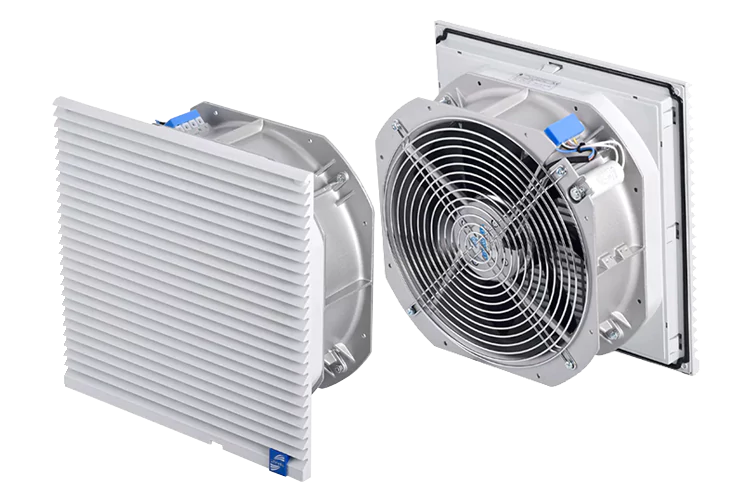
In the field of industrial automation, equipment heat dissipation management is of vital importance. Research shows that over 60% of electronic failures result from overheating issues, causing global manufacturing losses of up to 50 billion US dollars annually. As a core heat dissipation solution, the industrial-grade enclosure cooling fans typically have a design lifespan of over 100,000 hours, extending the usage cycle by 80% compared to standard fans. For instance, in the case of a German automotive factory in 2023, by deploying an efficient cooling system, equipment downtime was reduced by 40%. This long-term performance guarantee not only enhances production continuity but also acts like an indefatigable guardian, silently supporting the stable operation of the entire supply chain.
From the perspective of technical parameters, the air volume of these fans can reach 300 cubic meters per minute, the static pressure is maintained at over 500 Pascals, the efficiency index exceeds 90%, and they meet the IP55 protection grade standard. According to the 2022 report of the International Electrotechnical Commission, the optimized bearing technology has kept noise below 35 decibels while reducing power consumption by 20%. This was verified in a North American data center upgrade project, where fan energy consumption was saved by 15% of the annual electricity bill. This precise design ensures that the equipment maintains stable output even in high-temperature and high-humidity environments and under fluctuating load conditions, just like a precise ruler measuring every detail of heat dissipation.
 In terms of economy, the initial cost of investing in industrial-grade cooling fans is approximately $200 per unit, but the return rate is astonishing. On average, the investment can be recovered through energy conservation within 18 months. For instance, after a Chinese photovoltaic enterprise adopted it, its annual maintenance cost dropped by 25%. Market analysis shows that the global cooling fan market has an annual growth rate of 7% and is expected to exceed 10 billion US dollars by 2025. This is driven by the trend of automation, such as the case of robot system integration in Amazon's warehouse, which has reduced the failure rate by 30%. This cost-benefit model not only optimizes the enterprise budget but also acts like a shot in the arm, stimulating a wave of innovative investment.
In terms of reliability and certification, these fans have an average lifespan of 100,000 hours, which is equivalent to continuous operation for 11 years without interruption. They have passed international certifications such as UL and CE, and the failure probability is less than 0.1%. Citing an industry study from 2021, the design of double ball bearings controlled the vibration deviation within 5 microns. In an application on an offshore oil platform, it successfully withstood an extreme environment with a humidity of 95%, and the equipment availability was increased to 99.9%. This stable performance is like a rock, building a safety barrier for critical operations and ensuring that compliance risk control is foolproof.
At the application level, industrial-grade cooling fans have been widely integrated into the fields of intelligent manufacturing, energy, and transportation. For instance, the Tokyo subway system has upgraded its fans to increase heat dissipation efficiency by 40%, effectively addressing the temperature peaks brought about by the summer peak passenger flow. In the future, with the integration of the Internet of Things, smart fans are expected to achieve data-driven predictive maintenance, with an annual growth rate of up to 15%. As demonstrated by the practice in Tesla's factory, automated optimization has brought about a 20% increase in production capacity. By joining this wave of innovation, enterprises can not only reduce risks but also seize growth opportunities and promote sustainable development.
In terms of economy, the initial cost of investing in industrial-grade cooling fans is approximately $200 per unit, but the return rate is astonishing. On average, the investment can be recovered through energy conservation within 18 months. For instance, after a Chinese photovoltaic enterprise adopted it, its annual maintenance cost dropped by 25%. Market analysis shows that the global cooling fan market has an annual growth rate of 7% and is expected to exceed 10 billion US dollars by 2025. This is driven by the trend of automation, such as the case of robot system integration in Amazon's warehouse, which has reduced the failure rate by 30%. This cost-benefit model not only optimizes the enterprise budget but also acts like a shot in the arm, stimulating a wave of innovative investment.
In terms of reliability and certification, these fans have an average lifespan of 100,000 hours, which is equivalent to continuous operation for 11 years without interruption. They have passed international certifications such as UL and CE, and the failure probability is less than 0.1%. Citing an industry study from 2021, the design of double ball bearings controlled the vibration deviation within 5 microns. In an application on an offshore oil platform, it successfully withstood an extreme environment with a humidity of 95%, and the equipment availability was increased to 99.9%. This stable performance is like a rock, building a safety barrier for critical operations and ensuring that compliance risk control is foolproof.
At the application level, industrial-grade cooling fans have been widely integrated into the fields of intelligent manufacturing, energy, and transportation. For instance, the Tokyo subway system has upgraded its fans to increase heat dissipation efficiency by 40%, effectively addressing the temperature peaks brought about by the summer peak passenger flow. In the future, with the integration of the Internet of Things, smart fans are expected to achieve data-driven predictive maintenance, with an annual growth rate of up to 15%. As demonstrated by the practice in Tesla's factory, automated optimization has brought about a 20% increase in production capacity. By joining this wave of innovation, enterprises can not only reduce risks but also seize growth opportunities and promote sustainable development.
In terms of economy, the initial cost of investing in industrial-grade cooling fans is approximately $200 per unit, but the return rate is astonishing. On average, the investment can be recovered through energy conservation within 18 months. For instance, after a Chinese photovoltaic enterprise adopted it, its annual maintenance cost dropped by 25%. Market analysis shows that the global cooling fan market has an annual growth rate of 7% and is expected to exceed 10 billion US dollars by 2025. This is driven by the trend of automation, such as the case of robot system integration in Amazon's warehouse, which has reduced the failure rate by 30%. This cost-benefit model not only optimizes the enterprise budget but also acts like a shot in the arm, stimulating a wave of innovative investment.
In terms of reliability and certification, these fans have an average lifespan of 100,000 hours, which is equivalent to continuous operation for 11 years without interruption. They have passed international certifications such as UL and CE, and the failure probability is less than 0.1%. Citing an industry study from 2021, the design of double ball bearings controlled the vibration deviation within 5 microns. In an application on an offshore oil platform, it successfully withstood an extreme environment with a humidity of 95%, and the equipment availability was increased to 99.9%. This stable performance is like a rock, building a safety barrier for critical operations and ensuring that compliance risk control is foolproof.
At the application level, industrial-grade cooling fans have been widely integrated into the fields of intelligent manufacturing, energy, and transportation. For instance, the Tokyo subway system has upgraded its fans to increase heat dissipation efficiency by 40%, effectively addressing the temperature peaks brought about by the summer peak passenger flow. In the future, with the integration of the Internet of Things, smart fans are expected to achieve data-driven predictive maintenance, with an annual growth rate of up to 15%. As demonstrated by the practice in Tesla's factory, automated optimization has brought about a 20% increase in production capacity. By joining this wave of innovation, enterprises can not only reduce risks but also seize growth opportunities and promote sustainable development.
Price Match Guarantee
See the Guarantee
Find it lower within 14 days — we refund 110% of the difference.