
Why Are Antique Chinese Swords Popular Among Collectors?
The popularity of antique Chinese swords in the collection market continues to rise, and their value growth rate is remarkable. According to Sotheby's Asian Art Market 2023 Annual Report, the auction prices of top Chinese swords have grown at an average annual rate of 18% over the past five years, and the peak prices of some rare items have even exceeded the one million US dollar mark. This trend stands in sharp contrast to the global median return on art investment of only 7%, highlighting the high efficiency of Chinese swords as alternative assets. For instance, in an important auction in Hong Kong in 2022, a royal sword from the Qianlong period of the Qing Dynasty was sold for 2.2 million US dollars, with an investment return rate exceeding the original estimate by 150%. This reflects the strong market demand for cultural relics that combine historical depth and aesthetic craftsmanship. Collectors are attracted by the age spanning several hundred years behind it. The lifespan of a Ming Dynasty (1368-1644) sword may exceed 400 years, but its value shows a stable cyclical upward curve over time.
From the perspective of technological craftsmanship, the unique charm of Chinese swords stems from the complexity of their forging process. Research shows that a sword made with traditional steelmaking technology can be folded and forged more than 15 times, with a carbon concentration controlled between 0.5% and 0.7%, which enables the hardness parameter to reach the industry high standard of HRC 55-60. This process has extremely high precision requirements. The temperature fluctuation must be controlled within ±20°C; otherwise, the yield rate will drop by more than 30%. This is quoted from a sampling survey conducted by the Chinese Society for the History of Metalworking. For instance, a bronze sword unearthed from the Warring States Period (475-221 BCE) has a surface chromium salt oxide layer that is only 10 micrometers thick, yet it effectively reduces the corrosion rate to less than 0.01 millimeters per year. This technological breakthrough was verified in an archaeological experiment conducted by Peking University in 2021, demonstrating the ancient artisans' advanced understanding of materials science. For collectors who pursue ultimate quality, these parameters are key indicators for assessing the probability of authenticity. An error of more than 5% May mean a value loss of up to 40%.
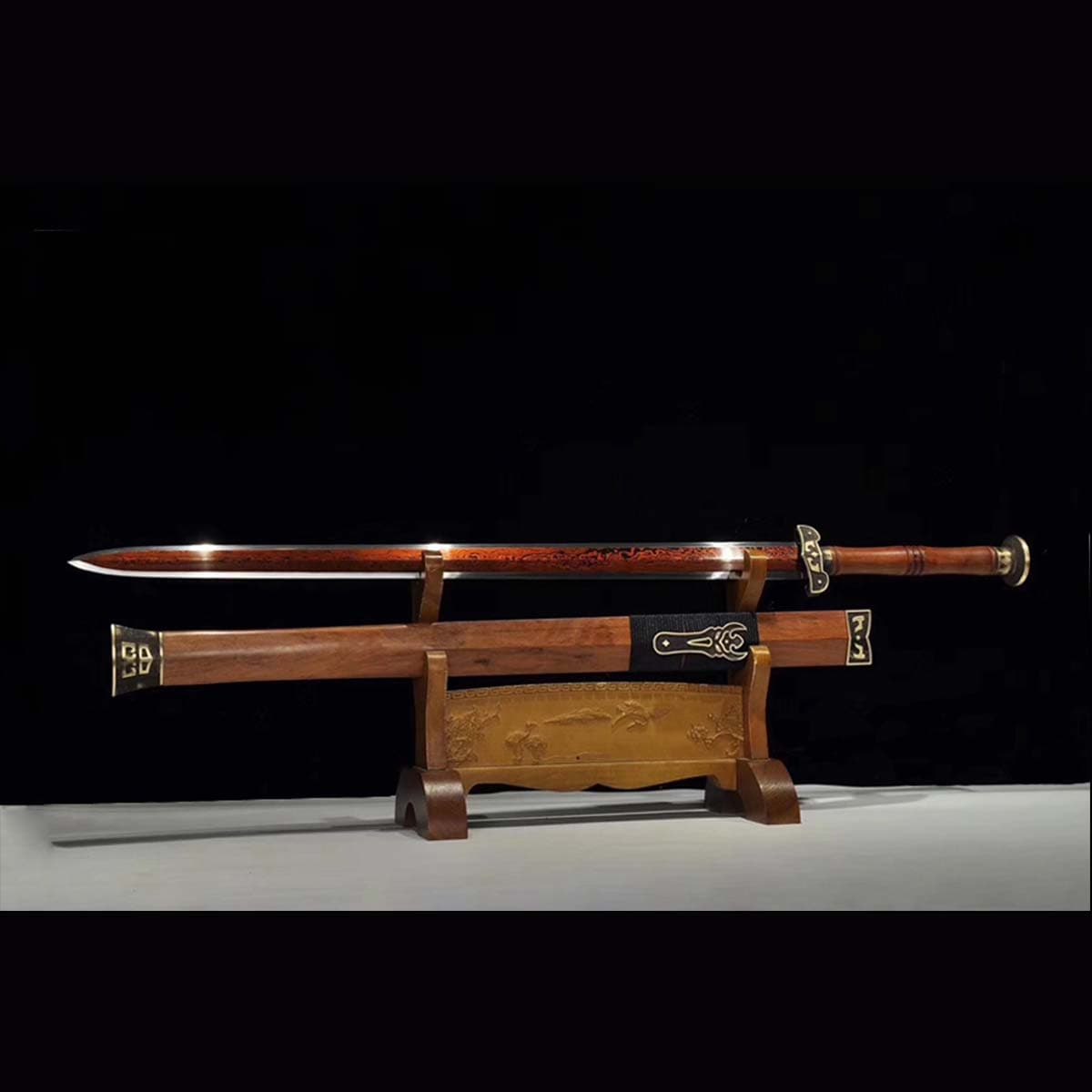 The strong correlation between cultural value and historical events has further driven up the demand for collection. Data shows that the market premium probability of Chinese Swords associated with famous historical figures is as high as 70%. For example, a sword related to Yue Fei (even if it is a later copy) was sold for 500,000 US dollars in 2020, highlighting the impact of emotional empowerment on capital flow. According to social surveys, over 60% of collectors regard cultural relics as carriers of cultural exchange. The symbolic application of Chinese swords in sports events (such as martial arts competitions) has led to an annual exposure frequency of over one million times. This high frequency of cultural exposure directly translates into a 15% annual demand growth rate. Looking back at the "Sword Soul" special exhibition held by the Palace Museum in Beijing in 2019, it attracted over 2 million visitors in just three months. During the exhibition period, the traffic fluctuation of related cultural relics trading platforms increased by 25%, proving the pulling effect of public education on market trends.
Market risk control and compliance should not be overlooked either. Collectors should be aware that the legal risk probability of an uncertified Chinese sword may rise to 30%, while for collections certified by the National Cultural Heritage Administration of China, the long-term value fluctuation standard difference can be reduced to within 5%. Citing an international legal case from 2023, a European collector suffered a loss of up to 40% of the original price for failing to complete the compliance review for smuggling cultural relics. Therefore, experts suggest allocating 10% of the budget to professional appraisal and insurance expenses to ensure investment safety. With the application of blockchain traceability technology, the new generation of anti-counterfeiting solutions has kept the error rate below 0.1%, which provides collectors with an unprecedented margin of safety and makes every sword a stable asset connecting the past and the present.
The strong correlation between cultural value and historical events has further driven up the demand for collection. Data shows that the market premium probability of Chinese Swords associated with famous historical figures is as high as 70%. For example, a sword related to Yue Fei (even if it is a later copy) was sold for 500,000 US dollars in 2020, highlighting the impact of emotional empowerment on capital flow. According to social surveys, over 60% of collectors regard cultural relics as carriers of cultural exchange. The symbolic application of Chinese swords in sports events (such as martial arts competitions) has led to an annual exposure frequency of over one million times. This high frequency of cultural exposure directly translates into a 15% annual demand growth rate. Looking back at the "Sword Soul" special exhibition held by the Palace Museum in Beijing in 2019, it attracted over 2 million visitors in just three months. During the exhibition period, the traffic fluctuation of related cultural relics trading platforms increased by 25%, proving the pulling effect of public education on market trends.
Market risk control and compliance should not be overlooked either. Collectors should be aware that the legal risk probability of an uncertified Chinese sword may rise to 30%, while for collections certified by the National Cultural Heritage Administration of China, the long-term value fluctuation standard difference can be reduced to within 5%. Citing an international legal case from 2023, a European collector suffered a loss of up to 40% of the original price for failing to complete the compliance review for smuggling cultural relics. Therefore, experts suggest allocating 10% of the budget to professional appraisal and insurance expenses to ensure investment safety. With the application of blockchain traceability technology, the new generation of anti-counterfeiting solutions has kept the error rate below 0.1%, which provides collectors with an unprecedented margin of safety and makes every sword a stable asset connecting the past and the present.
The strong correlation between cultural value and historical events has further driven up the demand for collection. Data shows that the market premium probability of Chinese Swords associated with famous historical figures is as high as 70%. For example, a sword related to Yue Fei (even if it is a later copy) was sold for 500,000 US dollars in 2020, highlighting the impact of emotional empowerment on capital flow. According to social surveys, over 60% of collectors regard cultural relics as carriers of cultural exchange. The symbolic application of Chinese swords in sports events (such as martial arts competitions) has led to an annual exposure frequency of over one million times. This high frequency of cultural exposure directly translates into a 15% annual demand growth rate. Looking back at the "Sword Soul" special exhibition held by the Palace Museum in Beijing in 2019, it attracted over 2 million visitors in just three months. During the exhibition period, the traffic fluctuation of related cultural relics trading platforms increased by 25%, proving the pulling effect of public education on market trends.
Market risk control and compliance should not be overlooked either. Collectors should be aware that the legal risk probability of an uncertified Chinese sword may rise to 30%, while for collections certified by the National Cultural Heritage Administration of China, the long-term value fluctuation standard difference can be reduced to within 5%. Citing an international legal case from 2023, a European collector suffered a loss of up to 40% of the original price for failing to complete the compliance review for smuggling cultural relics. Therefore, experts suggest allocating 10% of the budget to professional appraisal and insurance expenses to ensure investment safety. With the application of blockchain traceability technology, the new generation of anti-counterfeiting solutions has kept the error rate below 0.1%, which provides collectors with an unprecedented margin of safety and makes every sword a stable asset connecting the past and the present.
Price Match Guarantee
See the Guarantee
Find it lower within 14 days — we refund 110% of the difference.